
Key Takeaways:
- Document digitization services help you build a secure, paperless office by transforming physical records into searchable digital assets for faster retrieval and better corporate record management.
- OCR, metadata indexing, and digital document management improve operational efficiency, simplify compliance, and support smarter information governance across your organisation.
- Choosing the right document digitization partner ensures secure document archiving, scalable workflows, and a future-ready foundation for digital transformation.
Quick Answer:
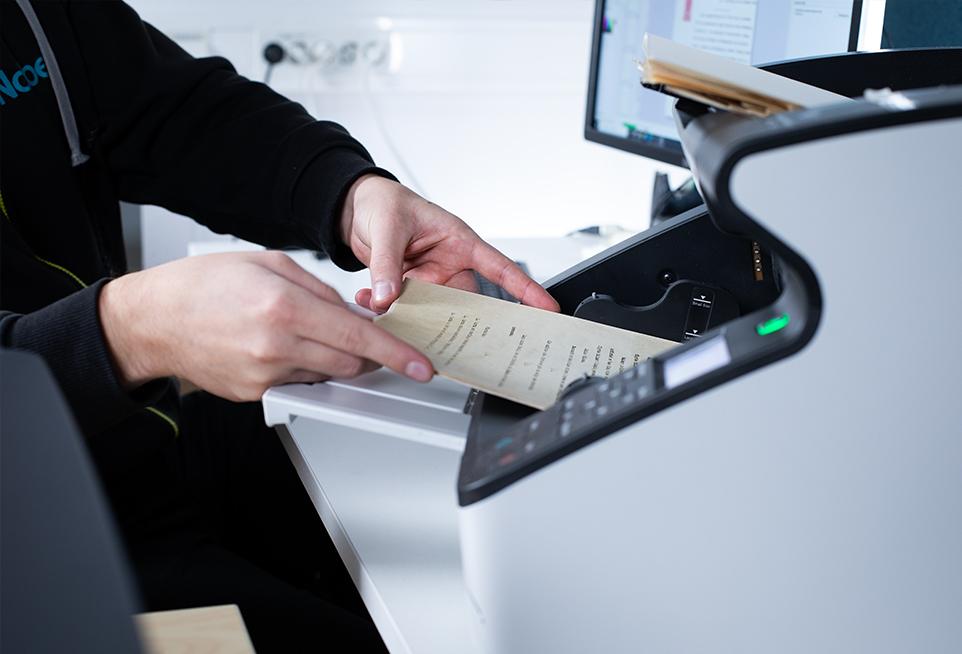
Document digitization services convert paper records into searchable digital files using document scanning, OCR, and intelligent indexing. They improve corporate record management by enabling faster document retrieval, stronger compliance, enhanced security, and efficient digital document management.
Today’s businesses are generating more information than ever before. At the same time, AI, automation, and digital transformation are changing how organisations manage that information. If you’re still relying on paper files, finding the right document quickly, ensuring compliance, and supporting hybrid teams can become a daily challenge.
Document digitization services help you build a paperless office by transforming physical records into searchable, secure, and instantly retrievable digital assets, making corporate record management more efficient, compliant, and future-ready. Instead of losing valuable hours or even opportunities, audits, or critical outcomes to filing cabinets, you gain instant access to the information you need.
In this blog we will explore the challenges of traditional paper-based record management and show you, step by step, how document digitization services can streamline corporate record management, strengthen compliance, and support the growing digital transformation needs of Indian enterprises.
What Corporate Record Management Actually Means for You
“The goal is to turn data into information, and information into insight.”
– Carly Fiorina, Former HP CEO
But insight is only possible when the right information is available at the right time. That’s exactly why effective corporate record management matters.
At its core, corporate record management is how you create, organize, store, protect, and eventually dispose of your organization’s business records, including confidential documents, contracts, financial statements, employee files, regulatory filings, project documentation- everything that keeps your business defensible and functional.
When secure document storage works, you can find any record in seconds and prove compliance on demand. Moreover, you will be assured that no fire or flood will wipe out twenty years of data.
When you don’t have document record management, and you keep searching for one document just before any important meeting- you feel the real pain in the time your team wastes searching, the risk your compliance officer loses sleep over, and the audits that turn into fire drills.
Traditional Record Management vs. Digital Record Management
| Traditional Record Management | Digital Record Management |
| Paper files | Searchable digital records |
| Manual retrieval | Instant OCR search |
| Physical storage | Cloud document storage |
| High damage risk | Backup & disaster recovery |
| Difficult audits | Audit-ready access logs |
The Problem: Why Paper Is Quietly Costing You
You’ve probably felt these pain points already, even if you haven’t put a number on them.
- You’re paying for space you shouldn’t need. Every square foot of office or warehouse space holding old files is rent you’re spending on paper, not people or growth.
- Your team loses real hours to retrieval. A single misfiled document can cost you – or your staff – an entire afternoon. Multiply that across every department, every week.
- You’re one disaster away from losing everything. Fire, flooding, or even a pest infestation can destroy paper records permanently, with no way to recover them.
- Hybrid work exposes the gap you’ve been ignoring. If your team works across cities or from home, a filing cabinet sitting in your head office isn’t just inconvenient – it’s inaccessible.
- Your compliance audits take longer than they should. Regulators and auditors expect you to produce records fast. Paper archives make that nearly impossible.
If you’re moving toward a paperless office, this is exactly where the cracks in your current system start to show. And these pressures are only intensifying- India’s push toward Digital India initiatives, tightening regulatory compliance frameworks, and rising data governance expectations mean the old way of managing records isn’t just inefficient anymore. It’s a liability you can’t afford to carry.
So what is the solution? That’s where document digitization comes in, and it’s simpler, faster, and more secure than you might expect.
The Solution: What Document Digitization Services Actually Do for You
Document digitization services convert your physical paper records -files, drawings, ledgers, and forms- into structured, searchable digital formats using scanning, OCR (Optical Character Recognition), intelligent document indexing, and secure cloud storage, providing you faster retrieval and centralized corporate record management.
Here’s what happens to your documents, step by step, when you bring in professional document scanning services:
- Document preparation: Your files are sorted, de-stapled, and organized
- Document scanning: High-resolution capture using production-grade scanners, often paired with OCR document scanning for immediate text recognition
- OCR processing: Scanned images are converted into searchable, editable text
- Metadata indexing: Your documents get tagged with searchable fields like date, department, project, or client
- Quality control: Every file is checked for accuracy against the original
- Upload to a document management system (DMS): Your records land in structured, secure storage, cloud or on-premise
- Secure disposal or document archiving of originals: Handled per your policy and regulatory requirements
This is different from basic scanning, which just gives you image files. What you get with true digitization is structure- OCR, indexing, and workflow integration. And your scanned images become something you can actually search, act on, and trust.
How This Solves Your Corporate Record Management Problem
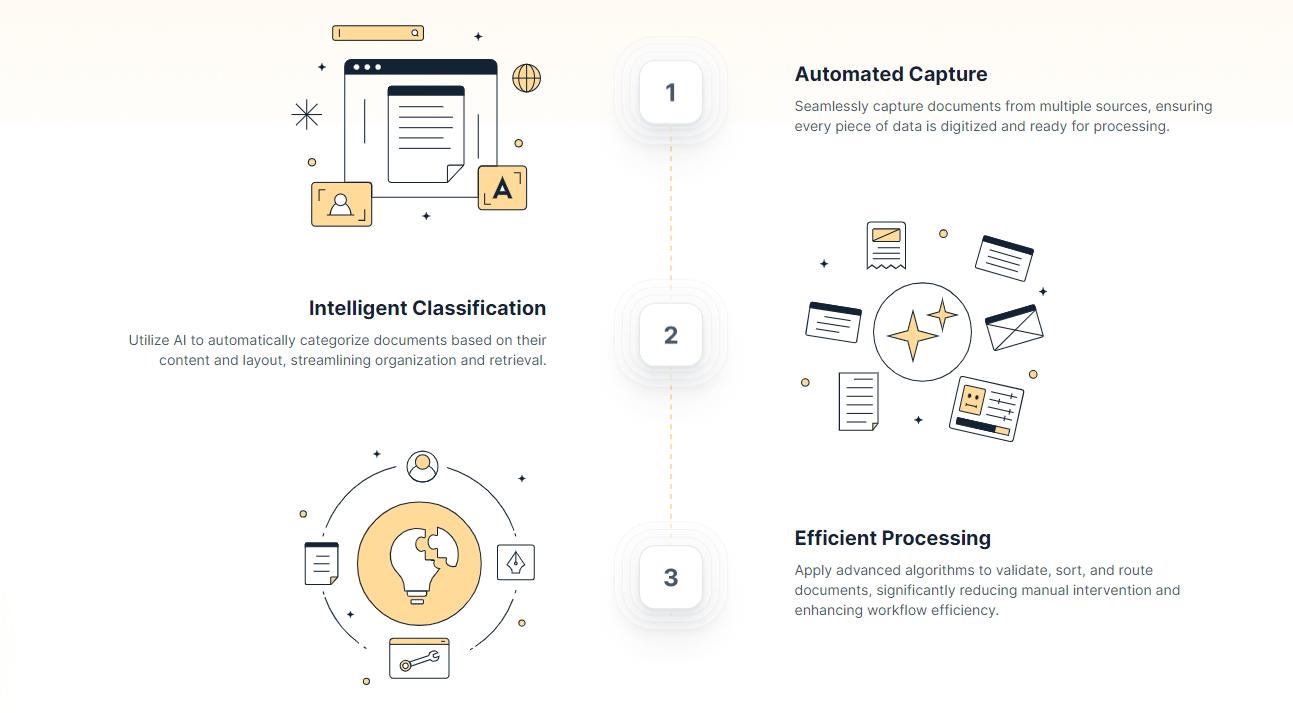
Once your records are digitized, here’s what changes for you, day to day, through structured digital document management:
Centralization: Your whole organization accesses records from a single cloud document management system, instead of chasing files across locations.
Fast searching: With full-text search and metadata indexing, a document that once took you 20 minutes to find now takes seconds.
Get control: digital records remove the risk of multiple conflicting paper copies floating around your departments.
Audit-ready: Time-stamped access logs mean you can produce records during a compliance audit without the scramble.
Automation: Your digitized records can trigger approval chains, renewal reminders, and retention schedules on their own – something paper simply can’t do for you.
What This Means for Your Bottom Line and Your Team
- Lower storage costs: You stop paying for physical archive space you don’t need.
- Faster document retrieval: Your team gets time back instead of spending it searching for files.
- Stronger regulatory compliance: Structured retention and audit trails work in your favor.
- Better disaster recovery: Your digital records back up across geographies, so you’re covered if the worst happens.
- Real collaboration: Your hybrid and distributed teams access the same repository, no matter where they sit.
- Clearer information governance: You see exactly who accessed or modified a record.
- Reduced data loss risk: Fire, flooding, pests, or human error no longer threaten your entire archive.
How OCR and Metadata Work in Your Favor
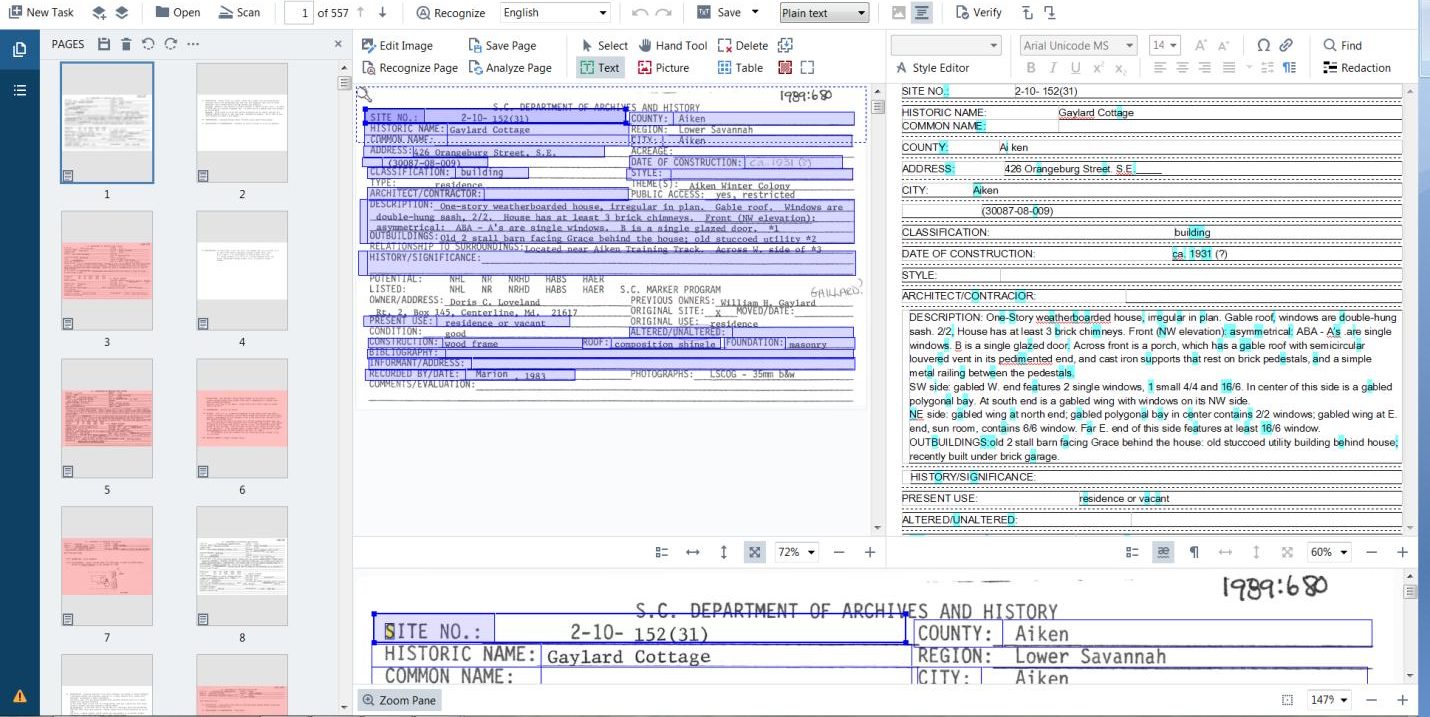
OCR (Optical Character Recognition) improves your corporate record management by converting scanned document images into machine-readable text, giving you full-text search, faster retrieval, and integration with your document management and workflow systems.
Without OCR, a scanned document is just a picture to your system – searchable only by whatever filename you gave it. With OCR, every word inside becomes searchable, which matters enormously once you’re dealing with thousands of contracts or case files that need to be cross-referenced fast.
Metadata indexing takes you a layer deeper. By tagging your documents with structured fields including client name, contract date, department, project code- you get database-like precision in how you filter and retrieve records.
Add AI document processing and intelligent document processing into the mix, and your platform can automatically classify document types, extract key data, and route records into the right workflow- cutting down the manual entry your team currently does by hand.
This is where document digitization meets enterprise content management: your records stop being a static archive and become part of a living, working system.
Is It Secure? Addressing Your Compliance and Risk Concerns
Yes, when handled by a certified provider like Skysite, document digitization uses encrypted transfer, secure facilities, role-based access controls, and audit trails, often giving you stronger security than physical paper archives, which are vulnerable to theft, damage, and unmonitored access.
If you’re in legal, healthcare, finance, or government compliance then it’s high time you take corporate document digitization to secure your business. Structured digital records make it far easier for you to demonstrate adherence to data governance expectations, retention mandates, and audit requirements than a room full of unindexed paper ever could.
Here’s what you should expect from a professional document digitization process:
- Chain-of-custody tracking for your physical documents during transit and processing
- Encrypted, access-controlled cloud document storage and secure document storage facilities
- Role-based permissions that limit who on your team can view or edit sensitive records
- Detailed audit logs for every document retrieval or modification
- Secure, certified destruction of physical originals, if that’s what your policy requires
Industries That Benefit the Most
Document-heavy, compliance-driven sectors see the fastest and largest returns from document digitization.
- Legal
- Healthcare
- Banking & Finance
- Government
- Education
- Manufacturing
- Real Estate
How You Should Choose Your Document Digitization Partner
This is a long-term infrastructure decision for you, not a one-off vendor purchase. Here’s what to look for:
- Scanning and OCR accuracy– ask for sample outputs and real accuracy benchmarks
- Security certifications and protocols– how they handle your data, encryption, and access controls
- Scalability– can they handle both your existing backlog and your ongoing scanning needs
- Integration capability– will it work with your existing document management system or ECM platform
- Industry experience– do they understand your sector’s compliance and retention requirements
- Indexing and metadata flexibility– can tagging be customized to match how you actually retrieve records
- Turnaround time and project management– do they give you clear timelines for large-scale projects
- Post-digitization support– will they keep supporting document indexing, document archiving, and system maintenance after go-live
Providers like Skysite bring document scanning services, OCR, metadata indexing, and cloud document management together into one set of document management services — so you’re not juggling multiple vendors to get your organization off paper.
Future of Document Archiving
Corporate record management is moving from passive storage toward intelligent, automated document lifecycle management. Here’s what you should expect to see more of:
- Wider use of AI document processing so your documents get classified and extracted automatically.
- More intelligent document indexing, reducing how much manual tagging your team does.
- Deeper workflow automation, linking your digitized records directly to approvals and compliance processes.
- Sharper focus on disaster recovery as more organizations decentralize their physical operations.
- Stronger information governance frameworks, as Indian regulators expect faster, digital-first responses from you.
- Continued growth of hybrid work environments, making cloud-based document retrieval something you’ll need as a baseline, not a bonus.
How Skysite Helps You Modernise Corporate Record Management
We believe that managing business records doesn’t have to be complicated. With Skysite’s end-to-end document digitization services, you can replace time-consuming paper processes with a secure, searchable, and efficient digital record management system designed to support your business growth.
- Digitise your paper records at scale with high-volume document scanning and OCR for faster, more accurate document retrieval.
- Centralise your business records in a secure cloud or on-premises document management system, giving authorised teams instant access from anywhere.
- Strengthen compliance and security with metadata indexing, audit trails, role-based access controls, and secure document archiving.
- Reduce operational costs and improve productivity by eliminating paper storage, minimising manual processes, and streamlining workflows.
- Support your digital transformation journey with scalable solutions that integrate seamlessly with your existing business systems and processes.
Conclusion:
Corporate record management in India is at an inflexion point, and you’re feeling that pressure directly- rising regulatory expectations, hybrid work as the norm, and physical storage costs that keep climbing, all while data governance expectations grow stricter across every sector.
Skysite’s document digitization services address each of these pressures head-on, turning your static paper archives into searchable, secure, and audit-ready digital records.
If you’re an IT manager, compliance officer, or records manager weighing your next move as part of a broader records management strategy, the question isn’t whether you should digitize- it’s how you do it, with a partner who understands both the technical workflow and the compliance stakes you’re carrying.
Frequently Asked Questions
How do document digitization services help corporate record management?
Document digitization services centralize your records into a searchable digital repository, making document retrieval faster while improving compliance, workflow automation, and overall corporate record management.
Why is document digitization important for your business?
Document digitization reduces physical storage costs, protects records from loss or damage, strengthens regulatory compliance, and enables secure access to business documents for hybrid and remote teams.
What is the difference between document scanning and document management?
Document scanning converts paper documents into digital images, while document management is the complete system used to organise, secure, store, search, and manage digital records throughout their lifecycle.
How does OCR improve corporate record management?
OCR (Optical Character Recognition) converts scanned documents into searchable text, allowing businesses to find files instantly, automate workflows, extract data accurately, and improve document management efficiency.
Is document digitization secure?
Yes. Professional document digitization providers use encrypted storage, secure facilities, role-based access controls, and audit trails to protect sensitive business information, making digital records more secure than paper archives.
Which industries benefit the most from document digitization?
Industries such as legal, healthcare, banking and finance, government, education, manufacturing, and real estate benefit the most from document digitization because they manage high volumes of records and must meet strict compliance requirements.
What are the benefits of digital record management?
Digital record management provides faster document retrieval, lower storage costs, stronger compliance, improved disaster recovery, enhanced data security, and better collaboration across distributed teams.
Ready to move your organization’s records off paper and into a secure, searchable system? Skysite’s document digitization services are built to help you